By BRUsoftBala • September 13, 2024
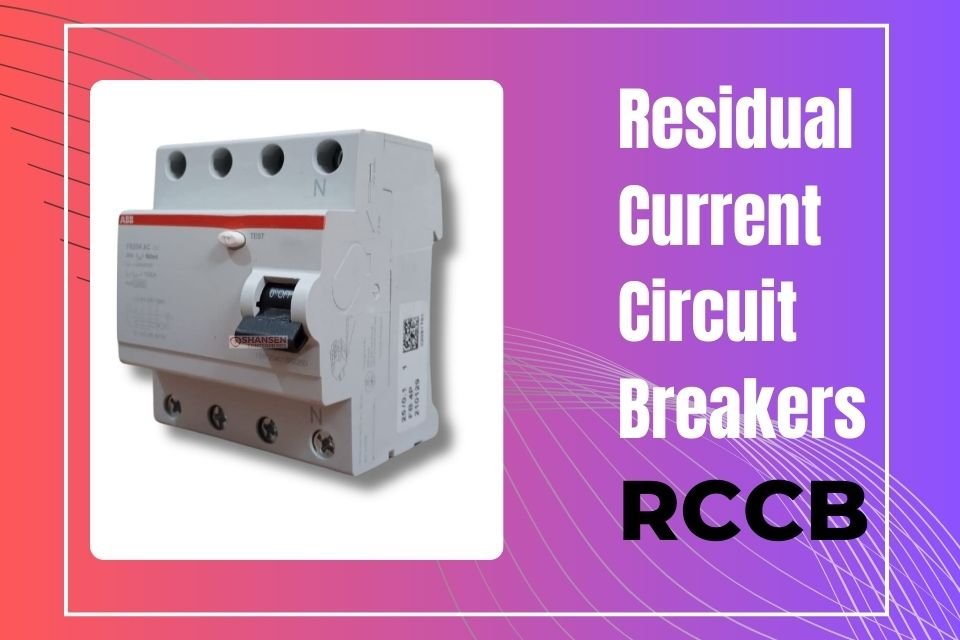
Residual Current Circuit Breakers (RCCB) are essential electrical safety devices that safeguard both people and equipment from electrical shocks and faults. They are designed to detect and respond to leakage currents that arise when the flow of electricity diverts unintentionally to earth (ground). This could happen due to faulty wiring, insulation failures, or direct contact with live wires. RCCBs promptly disconnect the circuit, preventing potentially dangerous situations like electric shock, fires, and equipment damage.
RCCBs come in various types to suit different environments and applications. Here are the most common types:
The working principle of RCCB revolves around detecting differences in the electric current flowing through the live (phase) and neutral wires. Here’s a simplified breakdown of how it functions:
When electrical appliances or circuits are functioning normally, the current flowing through the live wire is equal to the current returning through the neutral wire. However, if there’s a fault, like someone coming into contact with a live wire, a portion of the current leaks to the ground. The RCCB detects this difference (residual current) between the live and neutral currents.
When the RCCB senses a difference in current (leakage), it immediately disconnects the circuit. This response occurs within milliseconds, reducing the risk of electric shock or fire.
RCCBs offer several important advantages, making them crucial for both residential and industrial installations. Some of the key benefits include:
RCCBs are highly effective in protecting individuals from electric shocks, which can occur due to faulty wiring or accidental contact with live conductors. This makes them a must-have safety feature in homes, offices, and industrial environments.
By detecting earth faults and cutting off power before the leakage current can cause overheating, RCCBs help prevent electrical fires that could otherwise lead to catastrophic damage.
RCCBs can be used in a wide variety of installations, ranging from simple residential setups to complex industrial systems, making them highly versatile.
Most modern buildings are required to install RCCBs as part of their electrical systems to comply with international safety standards.
Despite their many benefits, RCCBs do come with some drawbacks:
RCCBs are designed solely to detect residual currents. They do not provide protection against overcurrent (short circuits or overloads). Therefore, they must be used in combination with other protective devices like Miniature Circuit Breakers (MCBs) or Molded Case Circuit Breakers (MCCBs).
RCCBs can sometimes trip unnecessarily due to minor current imbalances caused by certain appliances, such as refrigerators or washing machines. This may lead to inconvenience in residential settings.
RCCBs and MCCBs (Molded Case Circuit Breakers) serve different purposes in electrical systems. Here’s a quick comparison:
It’s not a matter of which one is “better,” but rather which is more appropriate for your needs. RCCBs offer protection from electric shock and leakage, while MCCBs are designed to handle overcurrent situations. For comprehensive safety, both devices are often used together in electrical systems.
RCCBs are versatile devices that are suitable for both domestic and industrial applications:
In residential settings, RCCBs are used to protect against accidental electric shocks and prevent fires caused by earth leakage currents. They are especially important in areas like kitchens, bathrooms, or outdoor installations where the risk of electric shock is higher.
In industrial environments, RCCBs are essential for protecting equipment and personnel from leakage currents. They are used in machinery, power systems, and other high-powered installations to detect faults and cut power before any harm can occur.
RCCB stands for Residual Current Circuit Breaker, a device that detects leakage currents and protects against electric shock.
No, RCCBs are designed only to detect earth leakage currents. To protect against short circuits, you need an MCB or MCCB.
RCCBs trip when they detect a leakage current greater than their rated sensitivity, typically due to faulty appliances, insulation damage, or accidental contact with live wires.
In many countries, RCCBs are required in homes and commercial buildings to comply with electrical safety standards.
Yes, 4-pole RCCBs are specifically designed for three-phase systems, commonly found in industrial environments.
Send us your requirements on WhatsApp or email — our team will get back to you with pricing and availability.